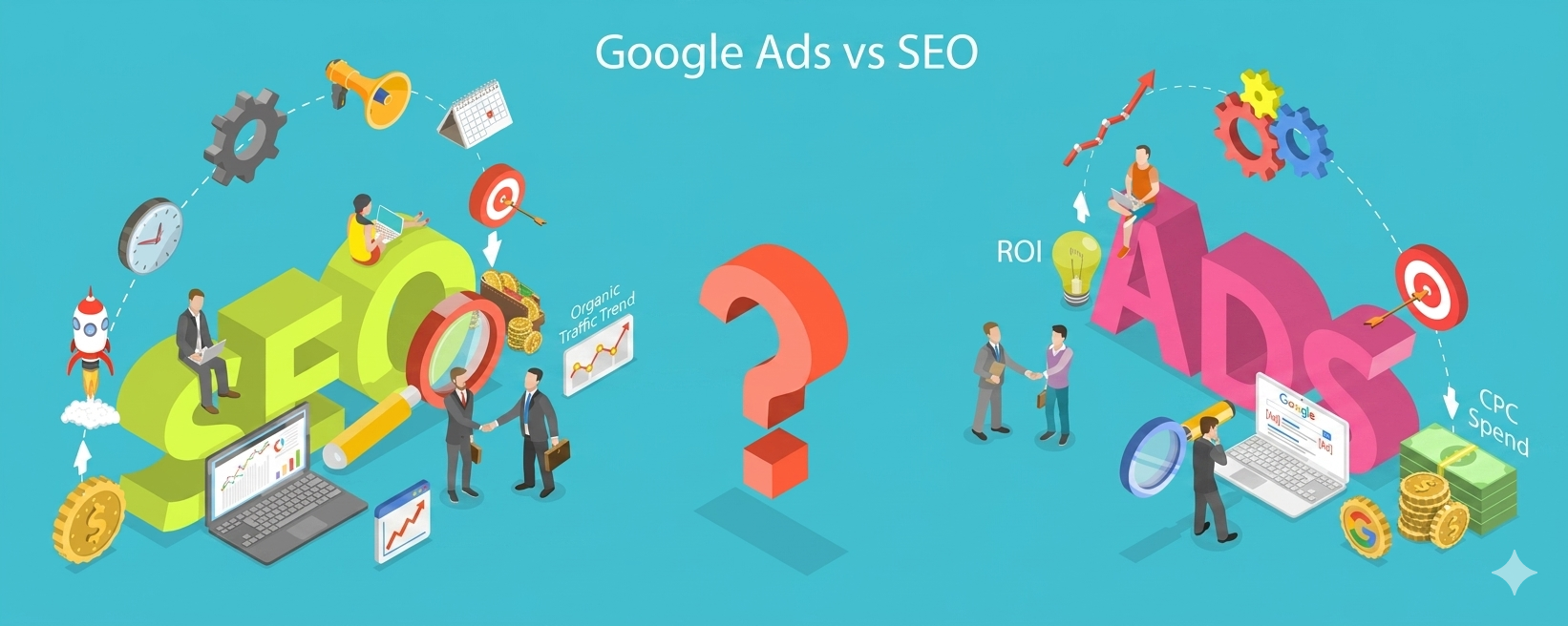



Search isn’t broken—it’s been completely rewired. What used to mean ranking #1 on Google now means getting cited inside an AI answer that the user reads and never clicks through. The businesses winning right now aren’t fighting harder for blue-link rankings. They’re working smarter by optimizing for the engines that actually answer the question: ChatGPT, Perplexity, and Google AI Overviews.
We’ve spent months testing what genuinely moves the needle on AI visibility versus what gets pitched as a silver bullet. Some tactics deliver. Most don’t. Here’s the honest playbook—backed by 2026 data and the same approach we use inside our SEO services.
To rank on ChatGPT, Perplexity, and Google AI Overviews in 2026, you need Generative Engine Optimization (GEO)—structuring your content so AI models can extract, trust, and cite it. The five things that move the needle: a direct 40–60 word answer at the top of every page, FAQ + Article schema, original statistics with sources, third-party mentions on Reddit/Quora/Wikipedia, and clean technical access for GPTBot, ClaudeBot, PerplexityBot, and BingBot. Brands cited inside AI answers earn ~120% more organic clicks per impression than uncited competitors on the same query (Seer Interactive, 2026).
Here’s something that should worry every business owner reading this. ChatGPT now has roughly 800 million weekly active users—double what it had eight months earlier. Google’s AI Overviews appear on 48% of all tracked search queries as of February 2026, up from about 7% at the start of 2025 (BrightEdge).
And when an AI Overview shows up above your #1 ranking? Your click-through rate drops 58% (Ahrefs, December 2025 study covering 300,000 keywords). You can rank first on Google and still lose more than half your traffic—because the user already got their answer in the AI box.
It gets sharper. Pew Research tracked 68,879 Google searches and found that when an AI summary is present, users click an organic result only 8% of the time, compared to 15% without one. Bain & Company reports that 80% of consumers now use AI-generated results for at least 40% of their searches.
The good news? Brands cited inside AI Overviews earn ~120% more organic clicks per impression than uncited brands. AI-driven visitors convert at 4.4x the rate of standard organic visitors (Semrush). The traffic shrinks—but the traffic that does come through is dramatically more valuable.
The game isn’t dead. It’s just different.
Generative Engine Optimization (GEO) is the practice of structuring content so AI engines—ChatGPT, Perplexity, Claude, Gemini, and Google AI Overviews—can understand, trust, and reuse it inside the answers they generate.
Traditional SEO optimizes for ranking positions in a list of ten blue links. GEO optimizes for inclusion in an AI-generated answer. The difference matters because the destination changed:
You’ll also see this called AEO (Answer Engine Optimization) or AI SEO. AEO was originally a voice-search term but has essentially merged with GEO, since most voice queries route through the same generative systems. If you’re already running proper SEO, GEO isn’t a separate channel—it’s an extension.
| Dimension | Traditional SEO | GEO | AEO |
| Goal | Rank in blue links | Get cited inside AI answers | Be the direct answer to a question |
| Primary Platforms | Google, Bing | ChatGPT, Perplexity, Gemini, Claude, AI Overviews | Featured snippets, voice assistants, AI Overviews |
| Success Metric | Position #1–10, organic clicks | Citation frequency, AI share of voice, brand mentions | Snippet ownership, position zero |
| Content Structure | Keyword-targeted pages | TL;DR answer + extractable claims + schema | Question → direct answer format |
| Authority Signals | Backlinks, domain authority | Brand mentions on Reddit, Wikipedia, third-party reviews | Schema, E-E-A-T, structured Q&A |
| What Wins | Long-form, optimized pages | Statistics, original research, clear definitions | Concise, structured, schema-marked answers |
In practice, you can’t separate them cleanly anymore. A page built right will rank in Google, get cited in AI Overviews, and feed ChatGPT. That’s the goal.
Treating ChatGPT, Perplexity, and Google AI Overviews as one channel is the biggest mistake we see. They have different mechanics—and you need to optimize for each.
ChatGPT pulls from two layers: its training data (older) and live web retrieval through SearchGPT (newer). SearchGPT uses Bing’s index as its primary web data source. Translation: if you’ve been ignoring Bing Webmaster Tools, you’re invisible to ChatGPT’s live search regardless of how well you rank on Google. Fix that this week.
Real example: An OtterlyAI analysis of over 1 million AI citations found Wikipedia alone accounts for 7.8% of all ChatGPT citations—more than most brand domains. ChatGPT drives roughly 77–87% of all AI-driven referral traffic to websites (SE Ranking / Conductor 2026).
Perplexity crawls the web in real time for many queries, which means fresh content can appear in responses almost immediately. It’s also the most citation-forward of the bunch—it shows sources visibly inside answers. Reddit pulls roughly 24% of Perplexity citations. Perplexity processes around 100 million queries per month.
AI Overviews are now on ~48% of all queries. YouTube leads citation sources at 23.3%, followed by Wikipedia at 18.4% and Google.com itself at 16.4% (Surfer SEO analysis of 46M citations). Local queries trigger AI Overviews about 68% of the time in 2026—a massive jump that means if you run a local business, you cannot ignore this.
Citation patterns at a glance:
| AI Engine | Primary Data Source | Top Citation Sources | Best Way In |
| ChatGPT / SearchGPT | Bing index + training data | Wikipedia, Reddit, news sites | Bing indexing, Wikipedia presence, original data |
| Perplexity | Live web crawl | Reddit (~24%), academic, news | Fresh content, Reddit presence, recency |
| Google AI Overviews | Google index | YouTube (23.3%), Wikipedia (18.4%), Reddit (~21%) | Strong Google ranking + structured content |
| Claude (Anthropic) | Training data + web search | Authoritative sites, documentation | Topical depth, clean structure |
| Gemini (Google) | Google index + training data | Google ecosystem heavy | Similar to AI Overviews approach |
These aren’t theories. Each one comes from documented 2026 research or large-scale citation analyses.
AI models with live retrieval (Perplexity, AI Overviews) evaluate page relevance heavily on opening content. Princeton’s foundational GEO research found that placing a concise, self-contained answer in the opening paragraph can improve citation likelihood by up to 115%. Write your intro as if it could be copy-pasted directly into a ChatGPT answer. No build-up. Lead with the answer.
Content with statistics, citations, and quotations achieves 30–40% higher visibility in AI responses (Superlines / Conductor 2026). Become a primary source, not a regurgitator. A custom survey, internal benchmark, or proprietary data from your own clients is worth more than ten well-written summaries.
What changed for us: Pages updated within the last 30 days receive 3.2x more citations than older material (Lureon.ai, 2026). Pages updated within 2 months earn 28% more citations (Superlines). For high-priority pages, a 30-day refresh cycle is now the baseline. Add visible “Last updated” dates.
Implement Organization, Article, FAQPage, HowTo, and Product schema. This isn’t optional anymore. Structured data is how AI systems unambiguously identify what your content is, who created it, and why it should be trusted. FAQPage schema is one of the fastest-growing schema types adopted in 2026 (Search Engine Land).
A 2026 OtterlyAI analysis of over 1 million citations found that community-driven platforms (Reddit, Quora) captured 52.5% of citations across ChatGPT, Perplexity, and Google AI Overviews combined. Reddit alone has over 3 million mentions in Google’s AI Overviews.
Translation: your own blog can be perfect and you’ll still lose to brands that show up in Reddit threads, Wikipedia entries, and Quora answers. Earn third-party mentions on the platforms AI systems trust.
People ask AI engines in full sentences—“what’s the best CRM for a small consulting firm”—not in keywords. Your headings should match how someone would actually ask the question out loud.
Check robots.txt and confirm these bots are not blocked:
If you blocked these in 2024 “to protect content”—you blocked your visibility. Time to revisit.
AI systems reward topical authority. One deep pillar page surrounded by 8–12 supporting articles signals expertise far better than 20 disconnected posts. We covered this strategy in detail in our B2B SEO Strategy guide for 2026.
Use bullet lists, comparison tables, numbered steps, bolded key terms, and short paragraphs. AI models extract content in chunks. The easier the chunk is to lift cleanly, the more likely it gets cited. Long, dense paragraphs are GEO poison.
You’ll see a lot of agencies pitching llms.txt as the silver bullet of AI SEO. Here’s the honest take.
llms.txt is a proposed markdown file that lives at yourdomain.com/llms.txt and lists your most important pages for AI crawlers. As of Q1 2026, no major AI company—OpenAI, Google, Anthropic, Meta, or Mistral—has publicly committed to reading or acting on llms.txt in their production systems. A Search Engine Land study found 8 out of 9 sites saw no measurable change in traffic after implementing it.Real example: It takes under 30 minutes to set up (Yoast SEO and Rank Math now generate it automatically), it’s helpful for developer tooling like Cursor and GitHub Copilot, and it’s low-risk insurance if it does get widely adopted. We recommend it for clients as a “set it and forget it” item—just don’t expect miracles.
Here’s the rollout we use with Atlantis clients. It assumes you already have a decent SEO foundation. If you don’t, start with our SEO services first.
What changed for us: Most clients see initial citation shifts in 2–8 weeks for well-executed work. The compounding effect kicks in around month three.
Old metrics—rankings and organic traffic alone—won’t tell you the full story anymore. Track these:
| Metric | What It Tells You | Where to Find It |
| AI Citation Frequency | How often you’re cited across AI engines | Profound, Otterly.ai, Peec AI |
| AI Share of Voice | Your citation % vs competitors for target prompts | Same tools as above |
| AI Referral Traffic | Sessions from ChatGPT / Perplexity / Gemini | GA4 (filter by source) |
| Branded Search Lift | Are more people Googling your name? | Google Search Console |
| Citation Sentiment | Is AI describing you positively? | Manual prompt testing + AI visibility tools |
| AI Conversion Rate | Do AI-referred visitors convert? | GA4 conversion tracking |
AI referral traffic now accounts for around 1.08% of all website traffic and is growing roughly 1% month over month (Conductor 2026 Benchmarks). It’s small, but it converts—and it’s the fastest-growing traffic channel on the internet.
Honest answer: depends on resources and timeline.
If you have a marketing team with strong technical SEO, content production capacity, and you can dedicate 10–15 hours a week, you can absolutely run the 30-day plan above yourself.
If you’re a founder, small business owner, or marketing manager juggling 12 other things—you’ll burn out before week three. This is where working with an agency that already has the AI visibility tracking stack, schema templates, the Reddit/Wikipedia outreach playbook, and Bing setup checklist saves you 3–6 months of trial and error.At Atlantis Marketing, we’ve been folding GEO into every SEO retainer since mid-2025. We cover the deeper agency context in our breakdown of what agentic AI for SEO is actually doing right now and the AI tools SEO agencies are using in 2026.
Search isn’t dead. But search-as-you-knew-it is. In 2026, a #1 Google ranking on an informational query gets you less than half the traffic it would have driven in 2024. Meanwhile, ChatGPT is sending highly converting visitors—at 4.4x the conversion rate of standard organic—to brands that bothered to optimize for it.
The brands that will own discovery for the next decade are the ones rebuilding their content for citation, not just for ranking. Direct answers. Original data. Third-party authority. Clean technical access. Schema. Updated regularly.
Start with one page. Measure obsessively. Expand deliberately.
GEO is typically bundled into existing SEO retainers rather than priced separately. Costs vary widely by market—for full context on what businesses pay globally, see our breakdown of SEO costs in India versus US/UK/European agencies in 2026.